
I’m starting to look into the Portugal Golden Visa and trying to understand the process. Has anyone worked with a U.S. based immigration attorney (ideally in California) for this? Would appreciate any…
That’s exactly how my journey started. A simple question that led me down a rabbit hole of complex regulations, tax implications, and costly mistakes that I’ve watched dozens of Americans make. After helping numerous clients navigate the Portugal Golden Visa program, I’ve seen brilliant people lose tens of thousands of dollars to avoidable errors.
The Portugal Golden Visa remains one of the most attractive residency programs for Americans seeking EU access. US nationals accounted for over 30% of all Golden Visa approvals in 2024, up from just 5% five years ago. But here’s what most people don’t realize: the program has undergone massive changes, and the mistakes Americans make can be devastating.
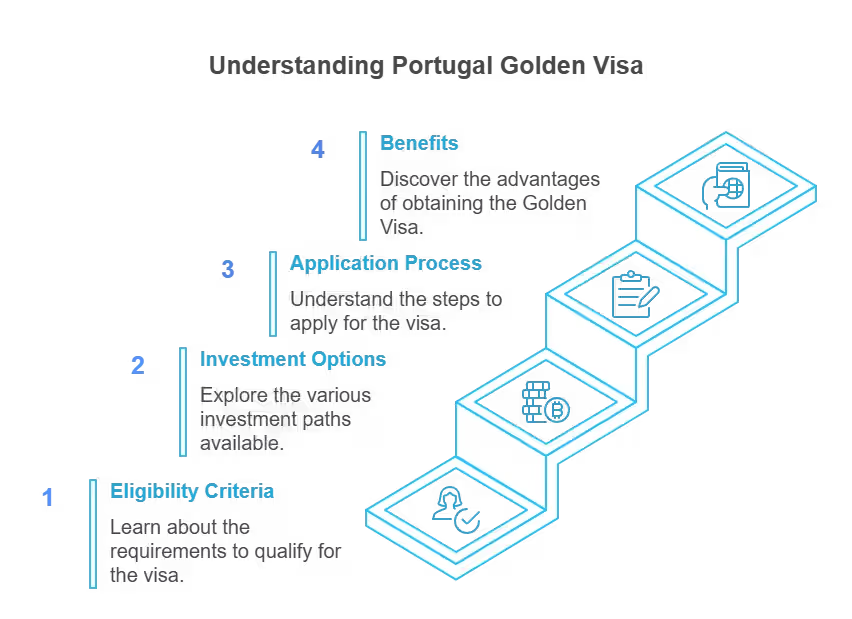
Complete overview of Portugal Golden Visa pathways and requirements
Mistake #1: Believing the Program is Dead (It’s Not)
The number one mistake I see? Americans thinking they’ve missed their chance. The confusion stems from headlines that screamed “Portugal ends Golden Visa” without the nuance that only certain routes closed. Investment funds—now the dominant option for Americans—remain completely available.
In fact, 2,081 main applicant Golden Visa permits were issued in 2024, demonstrating the program’s continued vitality despite the real estate suspension. The real estate route ended in October 2023, but investment funds, capital transfers, and business creation options remain fully active.
What’s actually available now:
- Investment funds (€500,000 minimum)
- Capital transfer routes (€500,000)
- Business creation (10+ jobs)
- Cultural/scientific donations (€250,000-€500,000)
Mistake #2: Ignoring the PFIC Tax Nightmare
This is where Americans get absolutely crushed. Nearly every Portuguese Golden Visa investment fund qualifies as a PFIC (Passive Foreign Investment Company) under US tax law. What does that mean? If you don’t handle this correctly, you could face:
Effective tax rates of 44% vs. 29% for compliant vs. non-compliant handling
Let me share a real example that should terrify you:
- €600,000 investment with 6% annual returns
- €250,000 gain over 6 years
- Non-compliant PFIC handling: €111,500 total tax (44% effective rate)
- Compliant with QEF election: €70,000 total tax (29% effective rate)
- Difference: €41,500 in unnecessary taxes
It is vital for investors to elect the QEF at the start of their holding period, as switching from ED to QEF later is a complex and costly matter. Those who cannot obtain this information cannot elect the QEF regime and must settle for the ED framework.
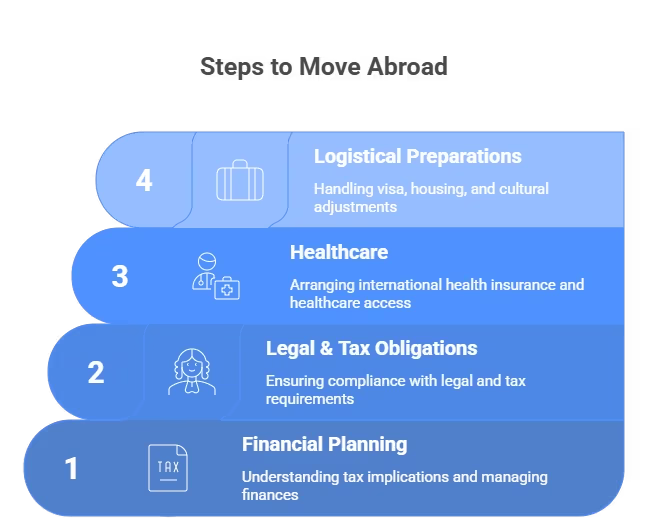
Essential tax and legal considerations for US citizens pursuing international residency
Mistake #3: Choosing Funds That Can’t Support US Tax Requirements
Many Portuguese funds either don’t understand this requirement or can’t/won’t provide the necessary documentation. You need a fund that provides:
- Annual PFIC statements for Form 8621
- Income character breakdowns (ordinary vs. capital gains)
- Timely reporting (by March 15th each year)
- US GAAP-compliant accounting
Another vital factor is the documentation, as it is imperative that US investors obtain a PFIC Annual Information Statement for their 8621 form, or information necessary to complete such form, in order to qualify for the QEF regime.
Mistake #4: Falling for “Guaranteed Buyback” Schemes
This mistake can cost you everything. Some funds provide short cuts Guaranteed buybacks and upfront returns circumventing 500K requirement, such funds do not meet conditions for Golden visa. Recently Portugal government started investigating funds that offered guaranteed buyback. Investors must prove to AIMA they have transferred full 500,000 euros from their non-portuguese foreign bank account.
These schemes target non-sophisticated Golden Visa investors, and intermediaries looking for higher commissions rather than protecting their client’s interests are the ones who typically advise on them.
Mistake #5: Using Retirement Funds Without Understanding Prohibited Transactions
This is the nuclear option of mistakes. Americans think they’re clever using self-directed IRAs to fund their Golden Visa investment. Here’s why it’s potentially catastrophic:
Residency visa investments may fall into this category of non-correctable prohibitions, which means that the excise tax burden can reach 115% of the invested amount. On a USD$600k prohibited transaction, the excise tax alone may exceed the investment amount (in parallel of the income tax and early-distribution penalties discussed above). The combined effect can be severe, in this case exceeding $900,000.
The IRS may view the residency benefit as a “prohibited transaction” because you’re receiving a personal benefit from your retirement account. Why funding with self-directed IRAs have a high chance of triggering catastrophic prohibited transaction penalties.
Mistake #6: Not Understanding the New Citizenship Timeline
On December 15th, Portugal’s Constitutional Court issued its decision. The Court declared four provisions of the Nationality Law amendments unconstitutional. As a result, the law cannot proceed as drafted and must return to the political process for revision before it can enter into force.
Currently, you can apply for citizenship after 5 years of residency. But proposed changes would extend this to:
- 10 years for Americans and most non-EU citizens, 7 years for EU citizens and CPLP nationals
Luckily, Portugal is known for its grandfathering clauses. They did this with the recent stoppage of the Non-Habitual Resident (NHR) tax regime, so it’s assumed they’ll do it for the Golden Visa as well.

The ultimate goal: Portuguese citizenship and EU passport access
Mistake #7: Skipping Due Diligence on Fund Selection
Perhaps the most consequential mistake investors make is rushing into fund selection without comprehensive due diligence. You need to evaluate:
Fund Structure:
- Open-ended vs. closed-ended (impacts your exit strategy)
- Sector focus (avoid anything real estate-related)
- Fee structure (management, performance, exit fees)
- Track record of fund manager
Red Flags to Avoid:
- Only investments in funds that do not invest in real estate, either directly or indirectly, remain eligible for the Golden Visa
- Funds without CMVM registration
- Managers without proven track records
- Funds that don’t understand US investor needs
The Bottom Line: Why Plan B Outbound Migration is Your Best Choice
After watching countless Americans navigate this process, I can tell you that success requires more than just having €500,000. You need expertise that spans immigration law, international tax planning, and investment analysis.
At Plan B Outbound Migration, we’ve built our entire practice around helping Americans avoid these devastating mistakes. We don’t just process paperwork – we provide the comprehensive strategy you need to protect your investment and achieve your residency goals.
The Portugal Golden Visa remains an incredible opportunity for Americans seeking EU residency. But only if you navigate it correctly. The mistakes I’ve outlined here have cost people hundreds of thousands of dollars and years of delays. Don’t let that be you.
For those considering their options, you might also be interested in our guides on Why Portugal Is The Top Choice For Expats And Investors and The Ultimate Guide to Relocating to Portugal and Securing the Portugal Golden Visa in 2025.
If you’re exploring other residency options, consider reading about Caribbean Citizenship Options: Which Island Offers the Strongest Passport? or our comprehensive Citizenship by Investment | Guide for HNWI.
For Americans specifically, our articles on Plan B Citizenship | Why More Americans Want It and Tax Planning for Expatriates: Preserve Your Wealth Today provide valuable insights into the broader context of international mobility planning.
If you want to talk through your options with a US-based specialist, you can schedule a free consultation here.
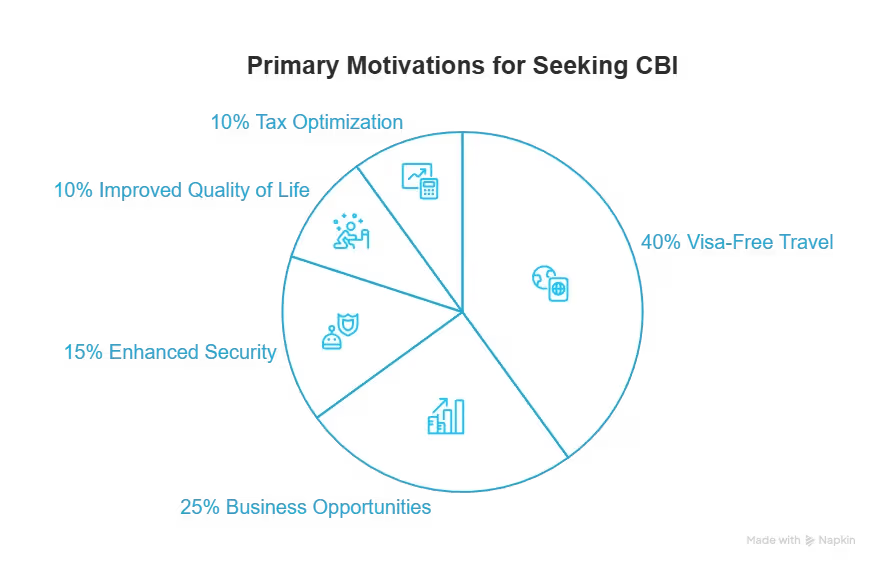
Comprehensive overview of global citizenship by investment opportunities
FAQ
Q: Is the Portugal Golden Visa still available for Americans in 2026?
A: Absolutely. The Portugal Golden Visa program is NOT fully suspended. Investment fund routes (€500,000+), capital transfer routes (€500,000+), and business creation options remain fully active and accepting applications. Plan B Outbound Migration specializes in helping Americans navigate the current investment fund options.
Q: What’s the minimum investment required?
A: €500,000 in regulated venture capital or investment funds, or €250,000 in cultural heritage projects (reduced to €200,000 in designated low-density areas). Plan B Outbound Migration helps you evaluate which option best fits your goals and tax situation.
Q: How long does the process take?
A: Initial approval typically takes 6-12 months, but the complete path to citizenship is currently 5 years (potentially extending to 10 years). Plan B Outbound Migration’s expertise can help streamline your application and avoid common delays.
Q: Can Plan B Outbound Migration help with the PFIC tax issues?
A: Yes, we work with specialized cross-border tax advisors who understand both Portuguese Golden Visa funds and US tax requirements. We ensure you select funds that can provide proper PFIC documentation and help structure your investment tax-efficiently.
Q: What makes Plan B Outbound Migration different from other firms?
A: We focus exclusively on helping Americans navigate international residency programs. Our deep understanding of both US tax implications and Portuguese immigration law means we catch issues other firms miss, potentially saving you tens of thousands in taxes and preventing application rejections.
Ready to explore your options? Schedule a 30-minute consultation with our team to discuss your specific situation and goals.