

If you searched second residency for americans, you are likely not looking for a vacation plan. You are looking for a legal backup option that protects mobility, family flexibility, and long-term planning. The core issue is not where to spend summer. It is how to secure lawful status in a second country without relying on forum myths.
Plan-B Outbound Migration Consultancy is a Beverly Hills practice led by founding partner Calvin S. Mazlumyan, Esq., a California licensed immigration attorney. The firm helps US and Canadian families evaluate second-residency pathways, especially Portugal and Greece investment routes, then coordinates documents and timeline steps before capital moves. Nothing here is legal or tax advice. No advisor can guarantee government approval outcomes.
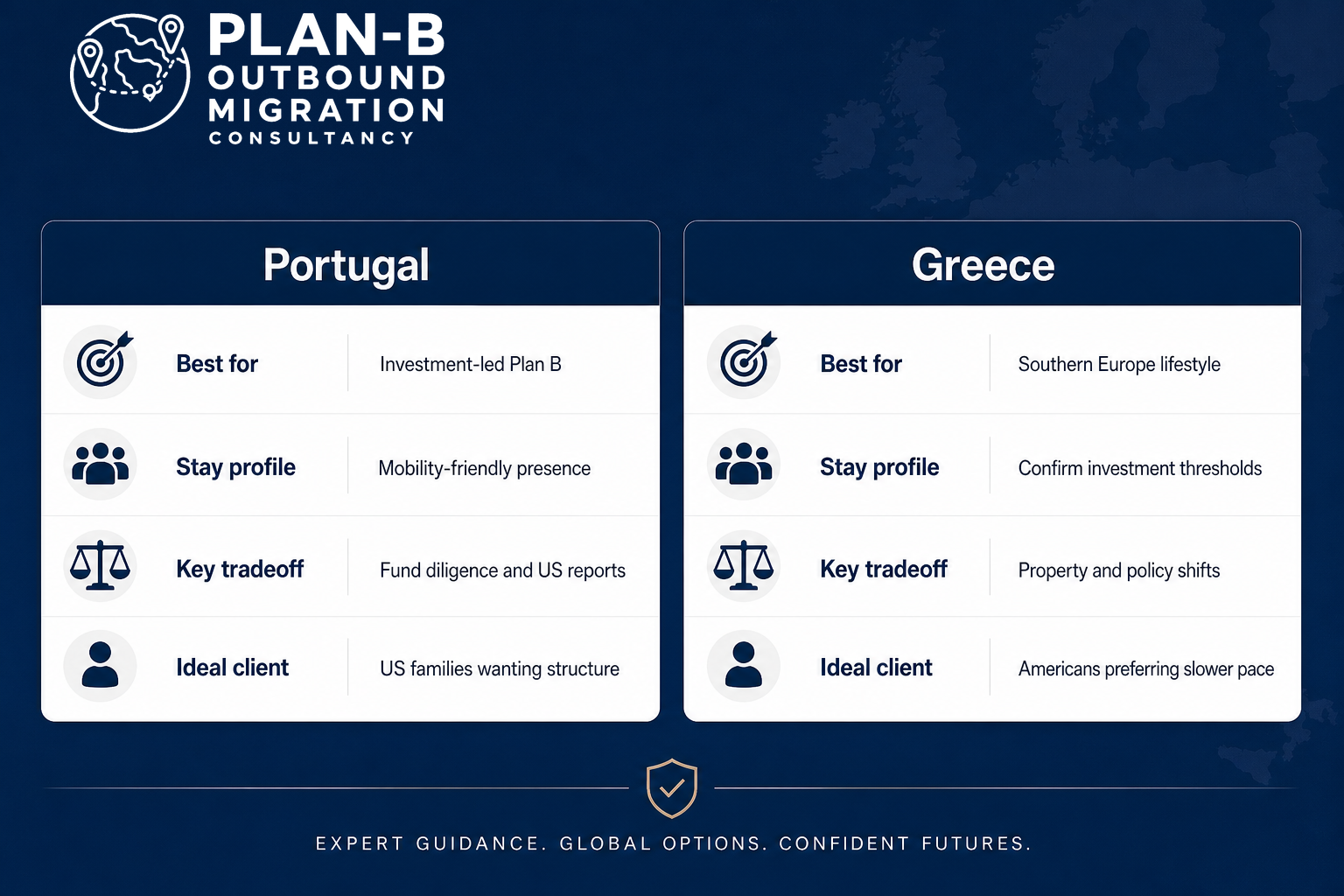
For many Americans who want a structured Plan B in Europe without an immediate job offer, Portugal remains the first practical shortlist country, with Greece as a close alternative depending on lifestyle, budget, and risk tolerance.
What does second residency mean for Americans?
Second residency means legal permission to live in another country under that country’s immigration laws while keeping your US citizenship. It does not automatically mean second citizenship, and it does not automatically end US tax filing duties.
Most mistakes happen when Americans blur four different concepts:
- Tourist stay rights
- Residence permits
- Tax residency
- Citizenship
A second-residency plan should define all four before money moves. If your strategy starts with social media rankings instead of legal route selection, you are exposed to avoidable compliance and timing risk.
Which second-residency paths are most realistic in 2026?
For this keyword, SERP results mix offshore advisors, lifestyle blogs, and community discussions. The most realistic routes for Americans usually fall into investment residency, work-based residence, family reunification, or remote-income programs.
1) Investment residency (Portugal and Greece focus)
Portugal and Greece are still major conversation hubs for US families seeking EU-adjacent mobility planning. Program mechanics evolve, so always verify official criteria before you commit funds.
- Portugal ARI framework reference: AIMA portal
- Greece migration framework reference: migration.gov.gr
For Plan-B-style clients, this path is often attractive because it can be structured around documented investments rather than local employment sponsorship.
2) Employment-based residence
If you have EU employer sponsorship, a work permit can be efficient. But for many Americans pursuing a “backup option” rather than relocation for a specific role, work sponsorship is less controllable than investor-led routes.
3) Family-based residence
Marriage or qualified family ties can provide durable options. These cases can be strong when legitimate, but documentation standards and dependency rules are strict.
4) Remote-income / non-lucrative style routes
Some countries support residence routes tied to stable non-local income. These can work well for entrepreneurs or remote professionals, but they are country-specific and easy to misunderstand when compared side-by-side with Golden Visa programs.
| Route | Best fit for Americans | Main risk if rushed |
|---|---|---|
| Investment residency | Families wanting structured Plan B mobility | Misreading eligibility or timeline assumptions |
| Work-based residence | Professionals with sponsor-ready offers | Losing status if employment changes |
| Family-based residence | Couples/dependents with genuine qualifying ties | Incomplete dependency documentation |
| Remote-income residence | Entrepreneurs and remote earners | Weak proof-of-income packages |
For industry trend tracking, use neutral monitoring sources such as IMI Daily alongside official portals.
Why is Portugal often the top shortlist for US families?
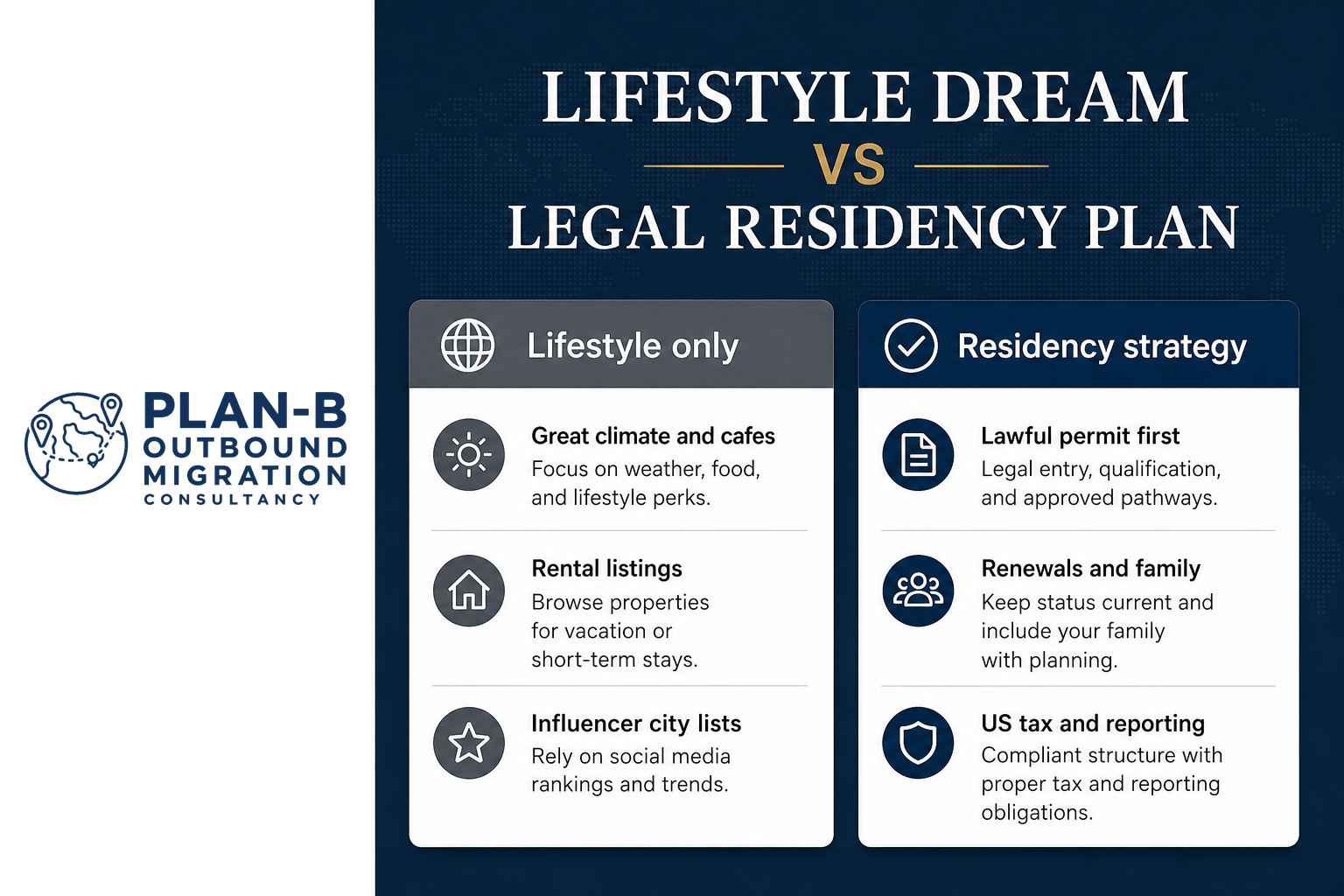
Portugal is often shortlisted first because many Americans can map it into a predictable process model: legal scoping, document gathering, investment execution, filing, and renewal management. It is not “easy.” It is usually more legible than fragmented alternatives.
Useful Plan-B context pages:
- Portugal Golden Visa overview
- Benefits guide for US clients
- What US citizens should know before moving abroad
Greece can be equally compelling for some households, especially when lifestyle goals and budget profile align better with its program realities.
What checklist should Americans complete before applying?
Second residency is won in prep quality, not in paid ads. Complete this checklist before signing subscriptions or wiring funds.
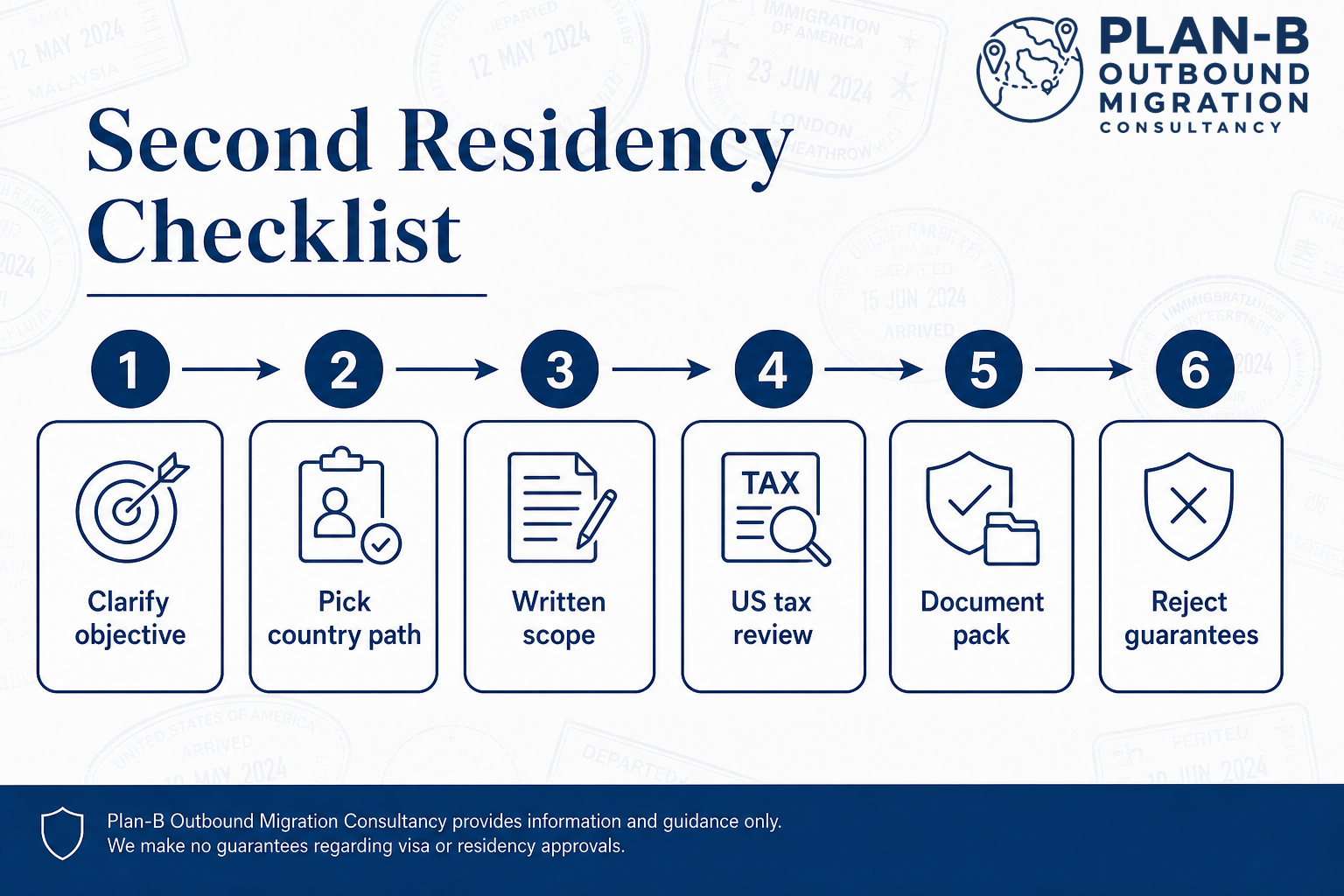
- Clarify objective: mobility backup, relocation, or citizenship long game
- Pick one country path first, not three at once
- Request written immigration scope and fee boundaries
- Review US tax and reporting impact before investment
- Build document pack early (identity, financial, background, family records)
- Reject guaranteed-approval claims and urgency pressure (USCIS scam warning mindset)
Plan-B offers a complimentary consultation via outboundmigration.com to help Americans sequence immigration and tax workstreams correctly.
FAQ
Is second residency the same as dual citizenship?
No. Second residency is residence status. Citizenship is a separate legal track, usually with longer timelines and additional legal tests.
Do I need to leave the US permanently to get second residency?
Not always. Some programs are designed around minimum physical-presence frameworks. Requirements vary by country and change over time.
Does second residency remove US tax obligations?
No. US citizens generally keep US filing duties on worldwide income. Residency and tax status are related but not identical.
Which countries do Americans usually compare first?
For this keyword, Portugal and Greece are frequent first comparisons for investment-led second residency, with additional review of work, family, and remote-income options.
How long does second residency take?
It depends on route, jurisdiction, documentation quality, and agency backlog. Treat marketing timelines as estimates, not commitments.
How can Plan-B help?
Plan-B helps US families shortlist legal pathways, coordinate document readiness, and structure realistic filing timelines. Tax filings remain with licensed CPAs or tax attorneys.
Next step
If second residency for americans is your priority, shortlist one primary country and one backup, confirm eligibility in writing, then align immigration counsel and US tax review before any capital transfer.
Plan-B Outbound Migration Consultancy offers a complimentary 30-minute consultation and publishes guides on the Plan-B blogs hub.
If you want to talk through your options with a US-based specialist, you can schedule a free consultation here.
Disclaimer: General information only, not legal or tax advice. Immigration and tax rules change. Confirm requirements with licensed US and destination-country professionals and official government sources before applying or investing. No outcome is guaranteed.